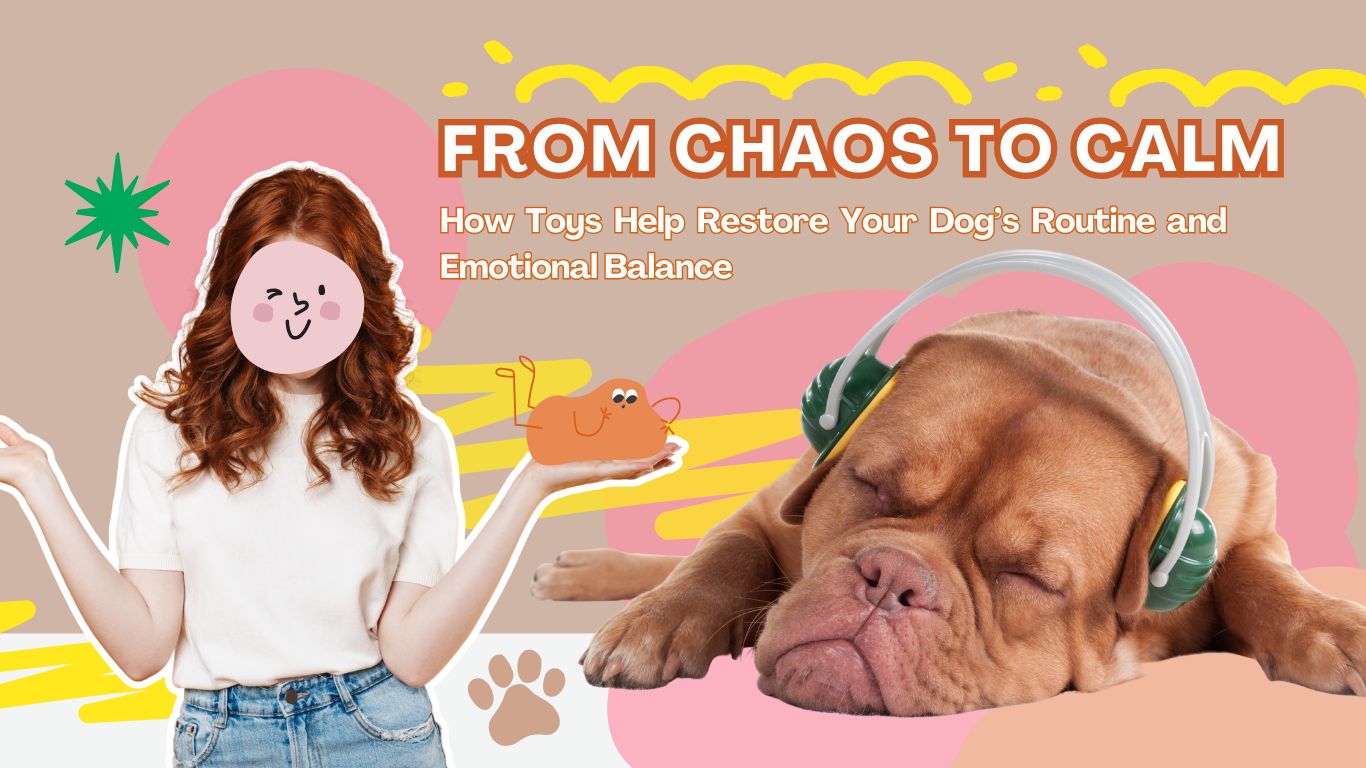
From Chaos to Calm: How the Right Toys Help Restore Your Dog’s Routine and Emotional Balance
If your dog has recently been:
-
Sleeping all day but wide awake at night
-
Becoming clingy, restless, or destructive
-
Showing emotional ups and downs
-
Living with a completely disrupted routine
The problem is rarely “bad behavior.”
More often, it’s a broken rhythm — and emotional imbalance follows.
What many owners don’t realize is this:
The right toy is one of the most powerful tools for rebuilding routine and emotional stability.
1. A Disrupted Routine Is Really an Emotional Problem
For dogs, routine is not just about feeding times or bedtime.
It’s about predictability — knowing what happens next, and feeling safe because of it.
When a dog’s routine falls apart, you’ll often see:
-
Increased emotional reactivity
-
Reduced focus
-
More chewing or destructive behavior
-
Either excessive clinginess or emotional withdrawal
In other words:
Disrupted routine = emotional instability.
2. Why Toys Play a Key Role in Restoring Routine
Many owners think of toys as simple entertainment.
From a behavioral science perspective, toys actually serve three critical functions:
1️⃣ Time Anchors
They help establish predictable moments throughout the day.
2️⃣ Emotional Outlets
They give anxiety, boredom, and tension a safe place to go.
3️⃣ Behavioral Substitutes
They redirect chewing, digging, and destruction to approved targets.
3. A Simple and Effective Daily Reset Formula
You don’t need to change your entire lifestyle.
Just add these three structured toy moments to your day:
🕘 Before You Leave: Energy-Release Toys
Let your dog engage in focused play or chewing before you leave.
This helps them transition into relaxation instead of anxious waiting.
🕔 During Alone Time: Companion Toys
While your dog is home alone, toys become a form of emotional continuity,
reducing loneliness and uncertainty.
🕗 Evening: Calming Chew Toys
Before bedtime, introduce low-stimulation, long-lasting chewing.
This helps shift your dog from high arousal to relaxation.
Over time, this creates a natural rhythm:
Play → Tired → Calm → Rest.
4. Why Chewing Is Essential for Emotional Stability
From a neurological standpoint, chewing stimulates the release of dopamine and endorphins —
two neurotransmitters directly linked to emotional regulation.
In simple terms:
Chewing = Self-soothing.
When dogs lack safe chewing outlets, they often turn to:
-
Excessive barking
-
Destructive behavior
-
Restless pacing
Not because they’re “misbehaving,”
but because their nervous system is seeking relief.
5. How to Tell If Your Dog Is Regaining Emotional Balance
Look for these changes:
-
More consistent sleep patterns
-
Easier transitions into rest
-
Calmer emotional responses
-
More focused, less frantic toy use
-
Reduced reactivity to environmental stimuli
These signs often reveal emotional recovery more accurately than obedience cues.
6. Toys Are Not Rewards — They Are Regulation Tools
Many owners only offer toys as rewards for good behavior.
In reality, toys are most powerful when used preventively, not reactively.
When integrated correctly into daily life, toys become:
-
Routine stabilizers
-
Emotional buffers
-
Behavioral regulators
Final Thoughts
Moving from a chaotic schedule to emotional stability doesn’t require punishment or pressure.
It’s a lifestyle adjustment:
creating space for your dog to use their body, release tension, and settle peacefully.
And toys — often underestimated —
are one of the most consistent and effective tools in that process.
Further Reading: